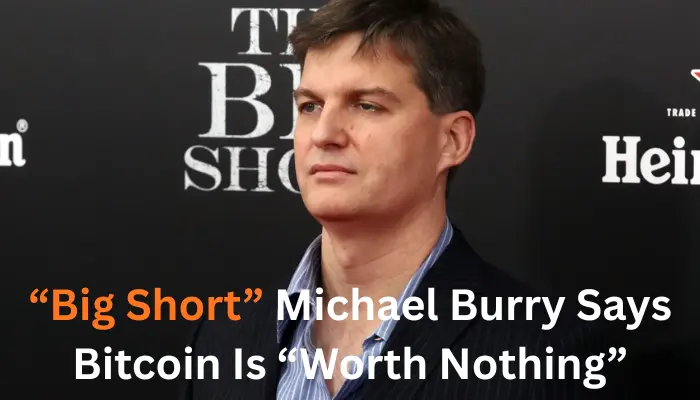
Burry shared his criticism during public comments in recent years, often on social media and interviews. He focused on value, cash flow, and use. His core claim stays simple. Bitcoin produces no income and relies on buyers paying more later.
Who Michael Burry Is and Why His Views Matter?
Michael Burry runs Scion Asset Management. He trained as a medical doctor, then turned to investing. In 2005, he spotted weak lending standards in U.S. housing. He bought credit default swaps tied to subprime mortgages. The trade paid off during the 2008 crash.
That record shapes his reputation. Many investors view him as an early warning voice. Others say his bearish style fits crisis periods better than long bull markets. Both views exist at the same time.
What Burry Means by “Worth Nothing”?
Burry measures value through cash flow and productive use. Stocks pay earnings. Bonds pay interest. Real estate can generate rent. Bitcoin does none of these things.
Bitcoin has no yield. It pays no dividend. Owners depend on price gains alone. Burry sees that setup as speculation, not investment. He compares Bitcoin to past bubbles that rose on belief, then fell once belief faded.
Is Bitcoin useless then? Burry answers yes under his definition of value. He sees no cash return and no claim on assets.
Bitcoin and the Question of Intrinsic Value
The debate turns on intrinsic value. Supporters argue scarcity creates value. Bitcoin has a fixed supply of 21 million coins. That limit attracts buyers who fear inflation.
Burry rejects that idea. Scarcity alone does not create value in his view. Many scarce items hold little worth. Value comes from use and income. Bitcoin struggles on both points.
Bitcoin does work as a payment system, but usage remains limited. Most holders treat it as a trade. Network fees rise during busy periods. Transactions slow at peak demand. These facts weaken the currency argument.
How Bitcoin Supporters Push Back
Bitcoin supporters respond with three main claims.
They call Bitcoin digital gold. Gold also pays no income, yet holds value. Supporters point to gold’s history as a store of wealth. Bitcoin lacks that long record, which weakens the comparison.
They cite adoption. Public companies hold Bitcoin on balance sheets. Exchange traded funds now track Bitcoin prices in some markets. Adoption grows, but price swings remain sharp.
They stress protection from inflation. Bitcoin supply stays fixed. Fiat money supply grows. This story attracts buyers during high inflation periods. Price action shows mixed results so far.
Market Reaction to Burry’s Comments
Markets did not crash after Burry’s statements. Bitcoin prices often move on broader factors like interest rates and liquidity. Social media reactions ran hotter than price charts.
Crypto traders dismissed Burry as outdated. Traditional investors nodded in agreement. The split reflects a wider divide between belief-driven assets and cash-based valuation.
Burry’s Past Warnings and Their Accuracy
Burry has warned about stocks, bonds, and crypto at different times. Some calls proved early. Others missed timing by years. His housing trade worked, but patience played a role.
This history offers a lesson. Being right on structure does not guarantee short-term success. Markets can stay irrational longer than expected. That truth applies to Bitcoin and to its critics.
What This Means for Bitcoin Investors?
Burry’s view forces investors to define their own rules. Do you buy assets for income or for price growth? Bitcoin fits the second group only.
Risk management matters. Bitcoin can fall 20 percent in a week. It can rise just as fast. Investors should size positions with care and avoid money needed soon.
Bitcoin also faces regulation risk. Governments control exchanges and on-ramps. That power affects access and price.
Conclusion
Michael Burry says Bitcoin is worth nothing, and his logic stays consistent. He values income, assets, and cash flow. Bitcoin offers none of these things. Supporters focus on scarcity and belief. That divide will not close soon.
Bitcoin remains a bet on future demand. Burry refuses that bet. Each investor must decide which logic fits their own goals and tolerance for risk.