Bitcoin has become one of the most talked-about innovations of the 21st century. From headlines about skyrocketing prices to debates about its future, Bitcoin continues to capture global attention. But beyond the hype, many people still ask a simple question: How does Bitcoin actually work?
This guide breaks down Bitcoin in a clear, beginner-friendly way—no technical background required.
What Is Bitcoin?
Bitcoin is a type of digital currency, also known as a cryptocurrency. Unlike traditional money issued by governments (like dollars or rupees), Bitcoin operates without a central authority such as a bank or government.
Instead, it relies on a decentralized network of computers around the world. These computers work together to process transactions, maintain records, and ensure everything runs smoothly.
In simple terms, Bitcoin is:
-
Digital (it exists only online)
-
Decentralized (no single entity controls it)
-
Peer-to-peer (you can send it directly to others)
The Problem Bitcoin Solves
Before Bitcoin, digital payments always required a trusted middleman—like a bank or payment service—to verify transactions. This created several issues:
-
Fees: Intermediaries charge for their services
-
Delays: Transfers can take hours or days
-
Control: Institutions can block or reverse transactions
Bitcoin removes the need for a middleman by using technology to create trust instead.
The Blockchain: Bitcoin’s Backbone
At the heart of Bitcoin is something called the blockchain.
A blockchain is a digital ledger (a record book) that stores all Bitcoin transactions ever made. Instead of being stored in one place, this ledger is shared across thousands of computers worldwide.
How It Works:
-
When a transaction occurs, it gets grouped with others into a “block.”
-
Each block is linked to the previous one, forming a chain—hence the name “blockchain.”
-
Once added, the data cannot easily be changed.
This structure makes Bitcoin secure, transparent, and resistant to tampering.
What Happens When You Send Bitcoin?
Let’s say you want to send Bitcoin to a friend. Here’s what happens step-by-step:
1. Transaction Creation
You use a digital wallet to send Bitcoin to your friend’s address. This address is like an account number.
2. Broadcasting
The transaction is broadcast to the Bitcoin network, where it waits to be confirmed.
3. Verification
Network participants verify that:
-
You actually own the Bitcoin
-
You haven’t already spent it elsewhere
4. Inclusion in a Block
Verified transactions are grouped into a block.
5. Confirmation
Once the block is added to the blockchain, your transaction is considered confirmed.
This entire process usually takes around 10 minutes, though it can vary depending on network activity.
Mining: How Bitcoin Transactions Are Confirmed
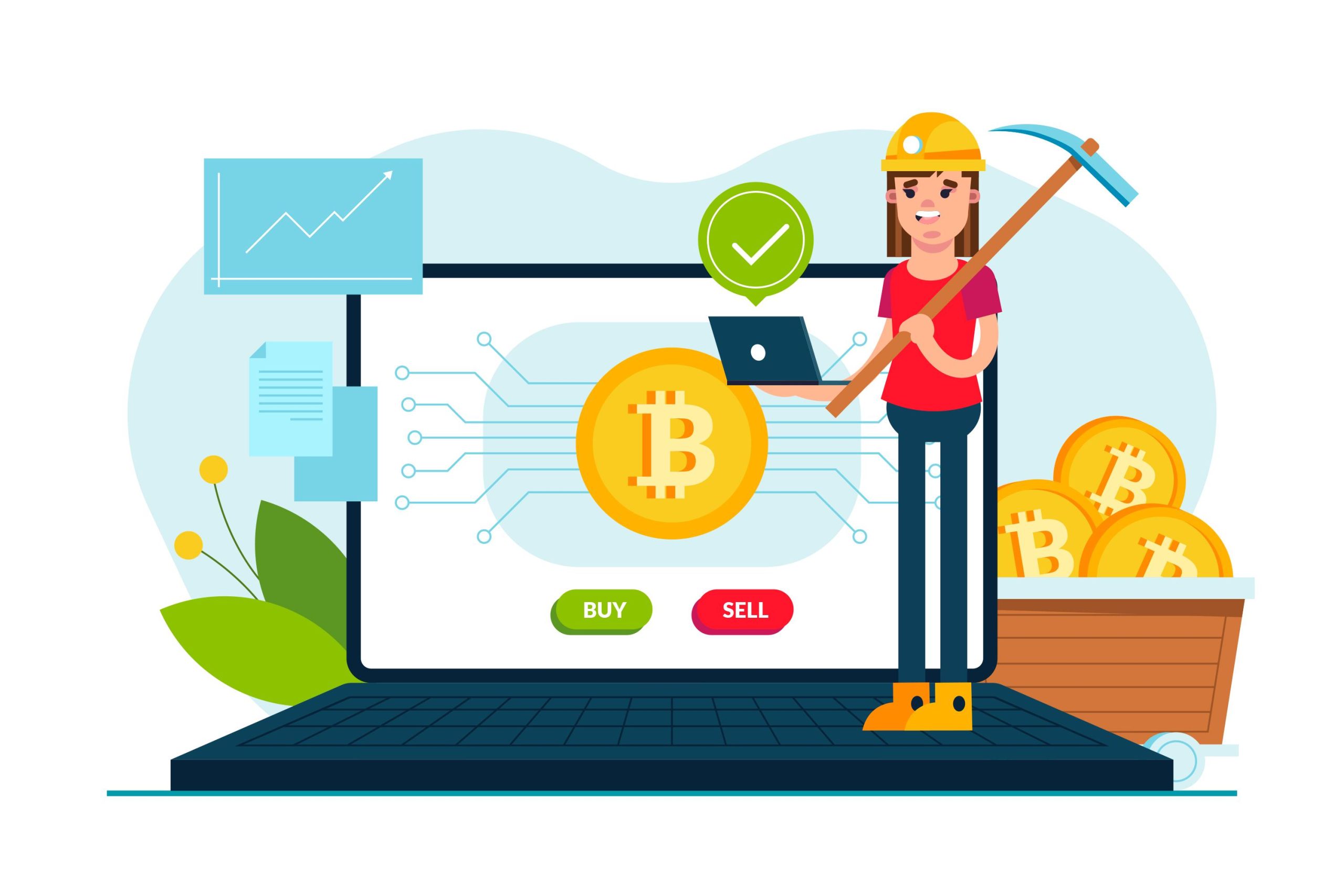
Bitcoin relies on a process called mining to validate transactions and add new blocks to the blockchain.
What Is Mining?
Mining involves powerful computers solving complex mathematical puzzles. When a puzzle is solved:
-
A new block is added to the blockchain
-
The miner is rewarded with newly created Bitcoin
Why Is Mining Important?
Mining serves two key purposes:
-
Secures the network by making it hard to manipulate
-
Creates new Bitcoin in a controlled manner
Bitcoin Supply: Why It’s Limited
One of Bitcoin’s most unique features is its fixed supply.
There will only ever be 21 million Bitcoin in existence. This scarcity is built into the system and cannot be changed.
Why Does This Matter?
-
It prevents inflation caused by excessive money printing
-
It creates digital scarcity, similar to precious metals
-
It influences Bitcoin’s value over time
As more people adopt Bitcoin, its limited supply could make it more valuable.
Digital Wallets: Storing Your Bitcoin
To use Bitcoin, you need a digital wallet. This is where your Bitcoin is stored.
Types of Wallets:
-
Hot wallets: Connected to the internet (mobile apps, web wallets)
-
Cold wallets: Offline storage (hardware devices, paper wallets)
Each wallet contains two important components:
-
Public key: Like your bank account number (you share this)
-
Private key: Like your password (you must keep this secret)
If someone gets access to your private key, they can control your Bitcoin.
Security: Why Bitcoin Is Hard to Hack
Bitcoin is considered highly secure due to its design.
Key Security Features:
-
Decentralization: No single point of failure
-
Cryptography: Advanced math protects transactions
-
Consensus mechanisms: Network agreement prevents fraud
To alter a transaction, an attacker would need to control a majority of the network’s computing power—something extremely difficult and expensive.
Advantages of Bitcoin
Bitcoin offers several benefits compared to traditional financial systems:
1. Financial Freedom
You can send and receive money without needing approval from a bank.
2. Lower Fees
Transactions can be cheaper, especially for international transfers.
3. Transparency
All transactions are recorded on the blockchain and can be viewed publicly.
4. Accessibility
Anyone with internet access can use Bitcoin—no bank account required.
Challenges and Limitations
Despite its advantages, Bitcoin is not perfect.
1. Price Volatility
Bitcoin’s value can rise or fall dramatically in a short time.
2. Scalability
The network can handle only a limited number of transactions per second.
3. Energy Consumption
Mining requires significant computational power, which uses electricity.
4. Regulation Uncertainty
Governments are still figuring out how to regulate cryptocurrencies.
Is Bitcoin Anonymous?
Bitcoin is often described as anonymous, but that’s not entirely accurate.
Instead, it is pseudonymous.
-
Transactions are linked to addresses, not real names
-
However, these addresses can sometimes be traced back to individuals
So while Bitcoin offers more privacy than traditional banking, it is not completely anonymous.
Real-World Uses of Bitcoin
Bitcoin is used in several ways today:
1. Payments
Some businesses accept Bitcoin for goods and services.
2. Investment
Many people buy Bitcoin hoping its value will increase.
3. Remittances
It can be used to send money across borders quickly.
4. Store of Value
Some view Bitcoin as “digital gold” due to its limited supply.
The Future of Bitcoin
Bitcoin is still evolving. Developers are working on improvements to make it faster, cheaper, and more scalable.
New technologies and layers are being built on top of Bitcoin to enhance its capabilities. Meanwhile, institutions and governments are increasingly paying attention to its potential.
Whether Bitcoin becomes a global currency, a store of value, or something else entirely remains to be seen but its impact is already undeniable.
Conclusion
Bitcoin represents a major shift in how we think about money. By removing the need for intermediaries and introducing a decentralized system, it offers a new way to transfer value across the world.
At its core, Bitcoin combines:
-
Cryptography
-
Decentralization
-
Economic incentives
Together, these elements create a system that is secure, transparent, and independent of traditional financial institutions.
While it comes with risks and challenges, understanding how Bitcoin works is the first step toward navigating the world of digital currencies. Whether you choose to invest, use it for transactions, or simply stay informed, Bitcoin is a concept that is shaping the future of finance.