
An Investor’s Guide on How to Buy Ethereum in Pakistan

Ethereum (ETH) remains one of the most sought-after digital assets due to its robust blockchain technology. For investors in Pakistan, navigating the crypto market can seem daunting due to regulatory uncertainties and limited local exchange options. However, with the right knowledge and tools and how to buy Ethereum in Pakistan is both accessible and secure. This comprehensive guide provides a step-by-step process for Pakistani investors to purchase ETH, optimized for 2025’s evolving market, while incorporating insights into secure platforms like Fillyx. Why Invest in Ethereum in Pakistan? Ethereum is more than just a cryptocurrency; it’s a decentralized platform that enables smart contracts and dApps, making it a cornerstone of decentralized finance (DeFi) and non-fungible tokens (NFTs). Ether (ETH) is used to power transactions on the Ethereum network, making it a versatile investment. Here’s why Pakistani investors are drawn to Ethereum: High Growth Potential: Ethereum’s price has shown significant growth over the years, with a 17.72% increase in value against the Pakistani Rupee (PKR) in the past year alone, as of April 2025. Hedge Against Inflation: With Pakistan’s economy facing inflationary pressures, cryptocurrencies like ETH offer a way to preserve wealth. Global Adoption: Ethereum’s use in DeFi, NFTs, and blockchain projects ensures its relevance in the global market. Accessibility: Despite regulatory gray areas, international platforms make it possible for Pakistanis to buy and trade ETH securely. Step-by-Step Guide to How to Buy Ethereum in Pakistan Follow these steps to purchase Ethereum safely and efficiently in Pakistan: 1. Understand the Legal Landscape Cryptocurrencies in Pakistan operate in a regulatory gray area. The State Bank of Pakistan (SBP) has cautioned against crypto risks and banned financial institutions from processing crypto transactions. Stay informed about local regulations, as the Pakistan Crypto Council (PCC) is exploring ways to regulate cryptocurrencies. Always ensure compliance with anti-money laundering (AML) and counter-terrorism financing (CTF) laws. 2. Choose a Secure Crypto Exchange Selecting a reliable exchange is critical. Since local exchanges are limited. Most Pakistanis rely on international platforms or peer-to-peer (P2P) services. Popular exchanges accessible in Pakistan include: Binance: Ninance is known for low fees and high security, Binance offers multiple payment methods, including P2P trading with PKR. Fillyx: A trusted platform offering fast and secure ETH transactions with a focus on user privacy and compliance. Paxful: A P2P marketplace with over 450 payment methods, ideal for converting PKR to ETH. Changelly: Supports instant ETH purchases with credit/debit cards and low fees. Compare fees, security features (like two-factor authentication and cold storage), and user reviews before choosing. For beginners, Binance and Fillyx are excellent starting points due to their intuitive interfaces. 3. Set Up a Digital Wallet Before buying ETH, you need a secure wallet to store your assets. Wallets come in various forms: Hardware Wallets: Ledger Nano and Trezor offer offline storage, protecting against hacks. Software Wallets: MetaMask (browser extension) and Exodus (desktop/mobile) are user-friendly and free. Mobile Wallets: Atomic Wallet and Guarda are convenient for on-the-go management. MetaMask is particularly popular in Pakistan for its ease of use and compatibility with DeFi platforms. Always enable two-factor authentication (2FA) and back up your private keys securely. 4. Register and Verify Your Account Once you’ve chosen an exchange, create an account: Visit the exchange’s website or app (e.g., Binance, Fillyx, or CEX.IO). Provide your name, email, and a strong password. Complete identity verification (KYC) by submitting a valid ID (e.g., CNIC) and proof of address. Most regulated exchanges require KYC to comply with global AML standards. Enable 2FA for added security. 5. Buy Ethereum Once your account is funded, follow these steps to purchase ETH: Log in to your exchange account. Navigate to the “Buy Crypto” or “Trade” section. Select Ethereum (ETH) and your preferred currency (e.g., PKR or USDT). Enter the amount you want to buy or choose a percentage of your balance. Review the transaction details (including fees) and confirm the purchase. Your ETH will appear in your exchange wallet or spot wallet. Tips for Successful Ethereum Investing in Pakistan Start Small: Begin with a small investment to understand the market. Diversify: Don’t put all your funds into ETH; explore other assets like Bitcoin or stablecoins. Stay Updated: Follow crypto news on platforms like X to track market trends and regulatory changes. Use Dollar-Cost Averaging (DCA): Invest a fixed amount regularly to mitigate price volatility. Be Patient: Ethereum is a long-term investment; avoid panic-selling during dips. Conclusion: How to Buy Ethereum in Pakistan Buying in Ethereum in Pakistan is an exciting opportunity to tap into the global crypto market. By choosing a secure exchange like Fillyx, setting up a reliable wallet, and following best practices, you can buy ETH with confidence. Platforms like FIllyx, Binance and others make the process accessible, even in a complex regulatory environment. Don’t let market volatility or uncertainties hold you back—start small, stay informed, and take control of your financial future. Call to Action: Ready to invest in Ethereum? Sign up for a trusted exchange like Fillyx or Changelly today and take your first step toward building wealth with crypto. Download a secure wallet like MetaMask to store your ETH safely. Start now and join the global Ethereum revolution!
Exploring the Bitcoin vs Ethereum Debate: What You Need to Know
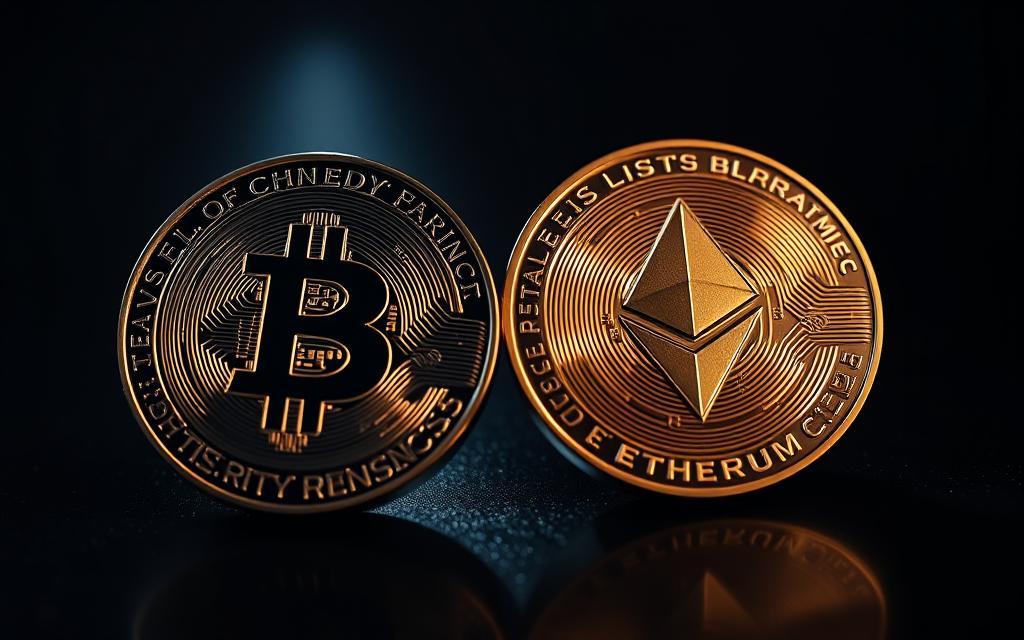
The world of cryptocurrencies is a dynamic and ever-evolving landscape, with Bitcoin and Ethereum standing as the two most prominent players. As the pioneers of blockchain technology, they have sparked endless debates among investors, developers, and enthusiasts about their respective strengths, weaknesses, and long-term potential. This article delves into the Bitcoin vs. Ethereum debate, exploring their fundamental differences, use cases, technological underpinnings, and what they mean for the future of decentralized systems. The Origins of Bitcoin and Ethereum Bitcoin: The Digital Gold Bitcoin is launched in 2009 by the pseudonymous Satoshi Nakamoto It was the first cryptocurrency to gain widespread recognition. BTC designed as a decentralized peer-to-peer (P2P) payment system. Bitcoin aimed to create a “trustless” network, eliminating the need for intermediaries like banks or governments. Its core innovation lies in its blockchain, a public ledger that records all transactions transparently and immutably. Bitcoin’s primary goal is to serve as a store of value and a medium of exchange, often likened to “digital gold” due to its fixed supply cap of 21 million coins and its resistance to inflation. Bitcoin operates on a Proof-of-Work (PoW) consensus mechanism, where miners solve complex mathematical puzzles to validate transactions and secure the network. This process, while secure, is energy-intensive, sparking debates about its environmental impact. Over the years, Bitcoin has evolved from an obscure experiment to a globally recognized asset, with a market capitalization exceeding $2 trillion as of July 2025, accounting for over 64% of the total cryptocurrency market. Ethereum: The World Computer Ethereum is conceived in 2013 by Vitalik Buterin and launched in 2015. It took the blockchain concept beyond currency. Ethereum is a platform for building decentralized applications (dApps) using smart contracts. Ether (ETH), Ethereum’s native cryptocurrency, powers these transactions and incentivizes network participants. Unlike Bitcoin, Ethereum originally used PoW but transitioned to Proof-of-Stake (PoS) in September 2022 with the Ethereum Merge, significantly reducing its energy consumption. This shift positioned Ethereum as a more sustainable alternative. With a market cap of over $300 billion, Ethereum is the second-largest cryptocurrency, known for its versatility in enabling decentralized finance (DeFi), non-fungible tokens (NFTs), and other blockchain-based innovations. Key Differences Between Bitcoin and Ethereum The Bitcoin vs. Ethereum debate often centers on their distinct purposes, technologies, and ecosystems. Below are the primary differences that define their roles in the crypto world. 1. Purpose and Functionality Bitcoin: Bitcoin was designed as a digital currency for P2P transactions. Its primary use case is as a store of value, akin to gold, with a focus on security, decentralization, and scarcity. Bitcoin’s simplicity ensures its reliability as a decentralized asset, but it limits its functionality beyond payments. Ethereum: Ethereum is a decentralized platform for building dApps. Its flexibility supports a wide range of applications, from DeFi protocols to NFT marketplaces and decentralized autonomous organizations (DAOs). Ethereum’s programmability makes it a hub for innovation, but it also introduces complexity and potential vulnerabilities. 2. Consensus Mechanisms Bitcoin: Bitcoin relies on PoW, where miners compete to solve cryptographic puzzles to validate transactions. This process ensures network security but consumes significant energy, with Bitcoin’s annual electricity usage rivaling that of small countries. Efforts like the Lightning Network and Taproot upgrade have improved scalability and privacy, but PoW remains a bottleneck for transaction speed and cost. Ethereum: Ethereum’s shift to PoS with the Merge reduced its energy consumption by over 99%, making it more environmentally friendly. In PoS, validators stake ETH to secure the network, eliminating the need for energy-intensive mining. This transition has improved transaction throughput and lowered fees, though high gas fees during network congestion remain a challenge. 3. Transaction Speed and Fees Bitcoin: Bitcoin’s average block time is about 10 minutes, resulting in slower transaction confirmations compared to Ethereum. While solutions like the Lightning Network enable faster, cheaper off-chain transactions, Bitcoin’s base layer prioritizes security over speed. Transaction fees are generally lower than Ethereum’s, especially since upgrades like SegWit. Ethereum: Ethereum processes transactions in approximately 15 seconds, making it faster for applications requiring quick confirmations. However, its auction-based fee model can lead to high gas fees during peak demand, particularly for complex smart contract interactions. Layer-2 solutions like Polygon and Arbitrum have mitigated this issue, but fees remain a point of contention. 4. Use Cases and Applications Bitcoin: Bitcoin’s primary use cases are as a store of value, a hedge against inflation, and a medium of exchange for P2P payments. Its adoption by institutions like MicroStrategy and Tesla has solidified its status as a legitimate asset class, though its volatility and regulatory scrutiny pose challenges. Ethereum: Ethereum’s smart contract functionality enables a vast ecosystem of dApps, including DeFi platforms, NFT marketplaces, and gaming applications. Projects like Uniswap, Aave, and The DAO highlight Ethereum’s versatility, but they also expose it to risks like smart contract vulnerabilities, as seen in the 2016 DAO hack. 5. Market Dynamics Bitcoin: Bitcoin’s market dominance has fluctuated, peaking at 70.6% in 2017 and rebounding to 64% by June 2025. Its fixed supply and halving events (reducing miner rewards every four years) contribute to its scarcity-driven value proposition. However, critics argue its limited functionality may hinder long-term growth compared to more versatile platforms. Ethereum: Ethereum’s market share is smaller, but its ecosystem drives significant innovation. The rise of competing Layer-1 blockchains like Solana and Cardano challenges Ethereum’s dominance, yet ongoing upgrades like Pectra in 2025 aim to enhance scalability and reduce fees, reinforcing its position. The Investment Perspective When comparing Bitcoin and Ethereum as investment opportunities, several factors come into play, including risk, volatility, and long-term potential. Bitcoin: The Safe Haven? Bitcoin’s appeal lies in its simplicity and scarcity. BTC often dubbed a “safe haven” asset, it attracts investors seeking protection against inflation and economic uncertainty. Its growing acceptance by institutions and central banks suggests a structural shift toward viewing Bitcoin as a reserve asset. However, its high volatility and regulatory risks, such as debates over the GENIUS and CLARITY Acts in the U.S., create uncertainty. Ethereum: The Growth Play Ethereum offers higher growth potential